
As witnessed by myself on the streets of New York last night, some of you are indeed nursing hangovers today.
I only hope you can remember the fun you had...much of it I observed as I wondered why women who plan on drinking wear high-heel shoes and micro-minis? Do they say to themselves: "I'll only have one green beer. Honest." I can only assume that's the case, otherwise when sober, even the non-rocket scientist knows that stilettos, 10 pints, vodka chasers, and the uneven sidewalks of NYC, do NOT go together. Some of them had designated "carriers" though, so that's good. :-)
I avoided their fate (and date with the porcelain god) by choice this year, as I always do... Not that I wasn't drawn to the madness mind you, lured by the shoulder to shoulder drinking establishments with their titles in florid Gaelic script, and the strains of jovial violin infused music over the dull roar of patrons "in their cups." Seeing a few of the folks from "someplace outside the city" wearing plastic green derby's and the afore-mentioned scantily clad "Irish for a day" lasses, all so blotto that they couldn't stand upright--one splayed out on the sidewalk in the exact spot where I saw a dog piss yesterday...cured me of any minor urge to get involved. That and the bouncers at the bars were just so darn scary. :-/ Seeing a few fistfights breaking out of the walls of the dimly lit dives and onto the sidewalks as I strolled by, I understood why.
It was like something out of "The Quiet Man," without the charm.
Now, don't get me wrong...back in the old Marvel days, we had a bar that was our frequent clubhouse-- The Abbey Tavern-- Irish through and through, right down from the bartenders who gave us buy-backs every third beer, to the old fella with the lovely accent always greeting by the front door, to the neon Guinness signs in the window, to the mounted dead animal heads on the walls covered in layers of dust. I remember a boar... uhum... and a moose... Ah, yes, it was a glorious place! And the site of many a Marvel St. Patty's Day for at least 10 years that I can count. Still miss the ol' Abbey... I know alot of us do. It was the one place that all the Marvelites gathered at least once a week, and a place that bonded us all. And, the food was pretty darn good too!
Sadly it was sold some years back, and the new owners turned it into some stupid generic disco place kinda thing now, with bright lights and shiny counters or some such... which may, I think, already have gone out of business by now...I don't know why?? We ALWAYS need another of those!! (insert sarcasm here)
Now, you may think I'm being pessimistic about St. Patty's Day. Not so, really. And I certainly was jolted out of any momentary surliness when four random, immaculately dressed bagpipe playing/kilt wearing gents came strolling by last night, playing to their hearts content, and as proud to be Irish as they come!
I smiled.
And so started, a wave of warmth and hazy flashbacks coursing through my brain, leading to a little bit o'nostalgia for the day whence a kid, had me clawing through my closet for something green, so that mean kids in school like Doug Moody wouldn't pinch me! (No offense Doug. ;-) But you were mean.) And making shamrocks out of green pipe cleaners to give to my Mom.
So, here I was.... I wanted to do SOMETHING! It's March 17th! I am part Irish afterall. One of my family names is McBride, for gosh sake!
I know...the food! One can always find comfort and camaraderie in the food of any given holiday! So, I donned a green shirt, slipped on a light leather jacket, 501's and cowboy boots, and took to the streets of our diverse metropolis. Looking for someplace, any place, with Irish Fare.
I had no delusions that I'd find another Abbey Tavern. There was ONLY one of those. My rules thus were simple: We wanted a place that did not smell like vomit and where one could sit comfortably. But, after checking out all the usual suspects--Irish Pub 1, Irish Pub 2, Irish Pub 3-- they were all either out of food, so densely packed as to be shoe horn material, or the kitchens were closed!
Blimy!
But, never fear, I finally found my corn beef and cabbage! And in the oddest of places--the Polish joint on the corner, of course! I should have just come here to begin with! Polish! Irish! They both end in "ish."
Well...I've been to this establishment many a time, and should know by now to interpret the menu liberally. I had "lasagna" there once. Huh... yeah....So, as one would expect, it was not the best corn beef and cabbage ever concocted--the cuts were too thick, not spiced properly....albeit nothing a little hot sauce and pepper didn't cure. The Soda bread was awesome, and so dense I almost choked a few times. Overall, I was pleased. Mission accomplished.
BUT, the one thing I needed to top off the evening didn't appear--you guessed it: They were out of Guinness. Argh. The number ONE sign that this was NOT the "ish" place begining with "Ir."
Not by a long shot.
(One of my friends, Andy, made some Guinness Ice Cream one time... I still have to get that recipe. It's great. Really it is!)
Nevertheless....I had a good ol' Brooklyn Lager instead. And went home somewhat pleased, headache free, and without the need to have my friend carry me home. Even stopping--for some transcending moments--along the way to listen to a trio of actual Irish musicians, one on violin, playing a haunting Gaelic tune on an otherwise deserted street corner, the acoustics causing an echo off the buildings around us...reminding me that on this corner there once used to be one of my favorite vintage shops, now sadly gone as well, called... "Love Saves The Day."
While the Irish "for a day," carried on the other less serene traditions, down the street.
:-)
So, as a wrap up to the St. Patty's Day festivities, here is a little Top Ten List of Little known Facts that I found on the internet, and which I shall attribute appropriately to the original source, and share with you now...for when your head is up to reading them.
Oh... and I'm still open to some hearing more live Irish music if anyone has a lead! :-)
Enjoy!
Renee
:-)
__________
http://www.toptenz.net/10-interesting-facts-about-st-patricks-day.php
Ahh, St. Patrick’s Day: the day when each one of your friends and even your grandfather seems to be Irish. This is probably the only day when you’ll dig through your closet, just to find that special green something to wear wherever you go. St. Patrick’s Day is celebrated all over the world, and for many, it’s a day to relax and drink, whether it’s Guinness or just some random green beer served at the bar. Many think St. Patrick’s Day is just about wearing green, drinking, and dealing with the hangover the next day. However, there are probably some things that many don’t know about St. Patrick’s Day.
Below is a list of ten things that you may not have known about the special day celebrated on March 17 of each year. Some of these facts you’ll find surprising, while others are a little bit more expected, especially if you’ve participated in a St. Patrick’s Day festivity once in your live. And of course, Happy St. Patrick’s Day!
10. Shamrocks
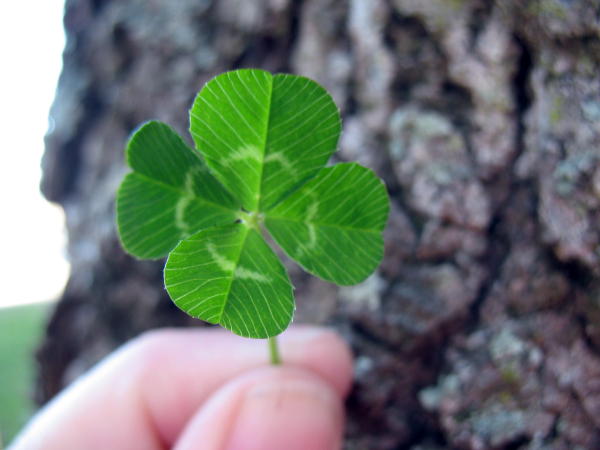
Of course with St. Patrick’s Day comes the massive appearance of shamrocks. Whether you’re wearing one pinned to your lapel or you have them on your socks, shamrocks have definitely become a central symbol for this day. In the olden days in Ireland, the shamrock was seen as sacred. Due to its green color and overall shape, many believed it to represent rebirth and life. The four leaves of the clover represent faith, love, hope, and of course, luck. Because of this, the shamrock has continued to be very popular in the Irish culture. When the Irish were under control of the English, many silent protests were held, and each person would wear a shamrock pinned to their shirt. From then on the shamrock has became a very well-known symbol that represents Ireland and the Irish people.
9. Prohibition in Ireland…Really

When you think of March 17, you almost surely will think of beer, and when you think of someone Irish, you probably think of beer and pubs as well. But, in the history of Ireland, beer wasn’t always a given on this widely-celebrated day. in 1903, a member of the Irish parliament, James O’Mara introduced a new bill that called to recognize St. Patrick’s Day as a religious observation in Ireland. However, because this was made a law, this meant that all of the local pubs had to close; therefore, no beer was readily available. So for 67 years, the Irish suffered through a total shut down of all pubs until 1970 when the law was overturned and the holiday was no longer a religious observance, but a national holiday.
8. Only Three Countries Truly Care
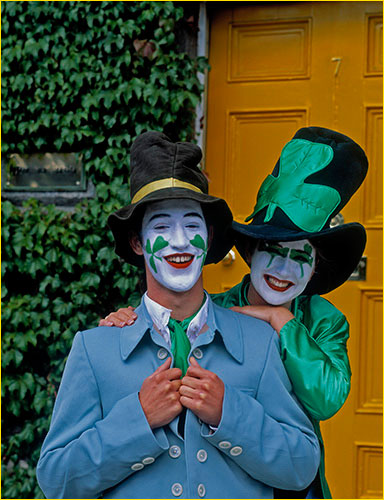
While many countries all over the world celebrate St. Patrick’s Day, from the U.S. to Australia to Argentina and South Korea, only a very select few countries have actually made this day a public holiday for everyone. First, the very tiny island sometimes known as “Emerald Island of the Caribbean,” Montserrat, is one of three countries that publicly celebrate the holiday. This is due to the high number of Irish refugees that came from Nevis and St. Kitts to the island. So to commemorate them, the holiday is celebrated. The holiday is also considered to be a public one in Newfoundland and Labrador. Here the holiday is celebrated to remember a failed slave uprising that occurred in 1798. And of course, last but not least, Ireland has made March 17 a public holiday as well.
7. Yes, Hallmark Makes Some Money Too
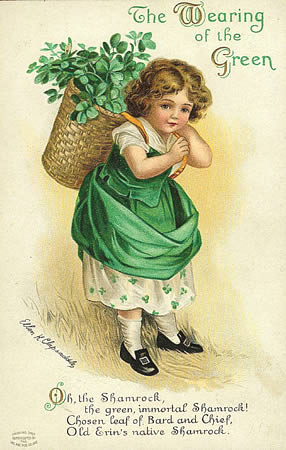
We all know about Hallmark and their greetings that are perfect for some of the most prized holidays such as Christmas, Mother’s Day, and even Valentine’s Day. If you’ve ever given someone a card, or received a card yourself, you’ve probably opened one that was closed by Hallmark’s famous gold seal. Though it seems crazy, on St. Patrick’s Day, Hallmark usually sells anywhere from 8-15 million St. Patrick’s Day cards each year. But, offering these cards to the public isn’t anything new for Hallmark. According to their website, the company has been offering these green cards since the early 1920s, and there is always a wide selection to choose from, usually between 100-150 cards each year.
6. So does McDonalds

If you’ve ever taken a look at McDonald’s “dessert” menu, to put it lightly, you’ve surely seen the pies, ice cream, cookies, and probably even one of those fruit parfaits. You’ve probably also noticed the varying milkshakes that McDonald’s offers, especially during certain holidays and seasons. Usually around the end of February or beginning of March, McDonalds offers its Shamrock Shake. Of course the milkshake is nothing but a green color that tastes like mint. First served in 1970, the shake had become very popular in the U.S., Canada, and Ireland but today is mostly popular in the U.S. Prices of the shake have about doubled in the last decade, and new additions are often added. Recently, McDonalds has served the shakes with whipped cream topped with a cherry.
5. Evacuation Day
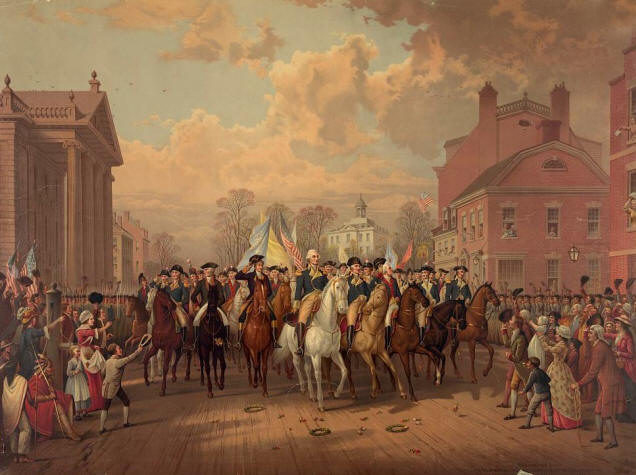
With every event that occurs, there’s usually some sort of coincidence to it, and St. Patrick’s Day is no exception. In a few counties in Massachusetts, the state with the largest amount Irish population (about one-fourth), there is a celebration of a day known as Evacuation Day. Mainly the day is celebrated in Somerville, Cambridge, and Suffolk County. While Boston is already well known for its celebration of St. Patrick’s Day, Evacuation Day is important as well. Coincidentally the holiday falls on March 17, but it does commemorate a very special event in Irish history. On March 17, 1876, the British forces left Boston after troops headed by Henry Knox and George Washington placed heavy artillery around the city. To celebrate this significant event, counties in Massachusetts made the day a holiday in 1901. However, the holiday is usually under heavy fire, as some see it as a waste of money, as workers are paid for a day off.
4. Snakes in an Ocean
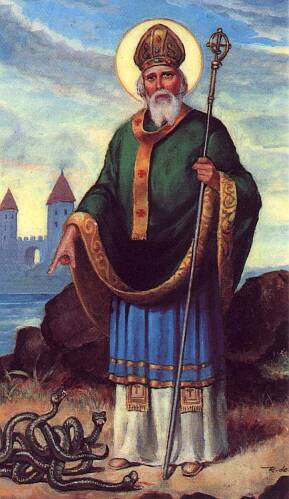
We’ve all heard one Irish folklore story or another, especially those centered on St. Patrick. One very popular story is that St. Patrick was able to chase all of the snakes out of Ireland where they then drowned in the ocean. However, when it comes down to it, St. Patrick didn’t chase any snakes out of anywhere, nor can you take folklore literally. In all reality, there has never been any record of snakes living anywhere near the Emerald Isle. Instead, figurative language was often used in these folklores, and in this case, the serpents more than likely represented druid and pagan religions that slowly disappeared from Ireland over a period of centuries after St. Patrick is said to have placed the seeds of Christianity there.
3. New York Has More Irish Pride
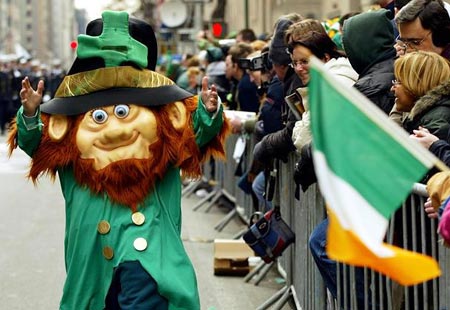
With a holiday all about the Irish, you’d probably think that the biggest and most widely known celebrations come from nowhere else but Ireland. However, as history shows, Ireland isn’t the country that tops the list with Irish pride, at least not when it comes to celebration and festivities. After decades of studying, no one has found the exact time when St. Patrick’s Day was first widely celebrated. The first known depiction of the holiday comes from a man named Jonathan Swift, who mentions a 1713 celebration taking place in London. The only thing mentioned is a day where Westminster Parliament was given a holiday and that buildings were decorated in green. In 1762 in New York City, the first parade honoring this holiday took place. Today it stands as the largest celebration and parade in the U.S. Almost 3 million people come to see the parade, with contains over 150,000 people that span a mile and a half long.
2. Green or Blue?
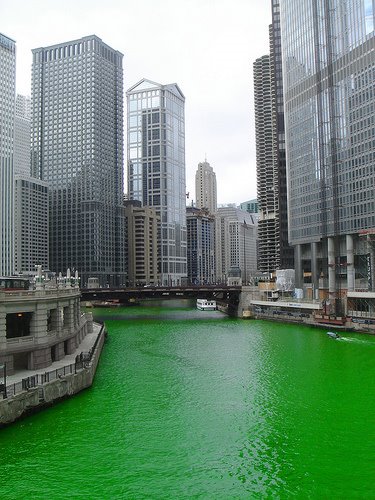
Though green is a very popular color on St. Patrick’s Day, the original color that was very popular and often related back to St. Patrick was not green, but blue. However, in today’s world, if you’re without an ounce of green, expect a pinch! In Irish folklore, green is known as being worn by immortals and fairies, and often signified new life and crop growth. Some even say that wearing green is considered to be unlucky as it is known to represent a time in Irish history when Ireland was not a free country. Blue came into the picture long ago when the military men wore “St. Patrick’s Blue” in their uniforms. The blue is also represented during the time when Henry VIII was declared King of Ireland and the flag used was a gold harp on a blue background. But today, green is the prominently known and worn color. In Chicago, the Chicago River is dyed green using 40 pounds of green vegetable dye.
1. St. Patrick Wasn’t Irish
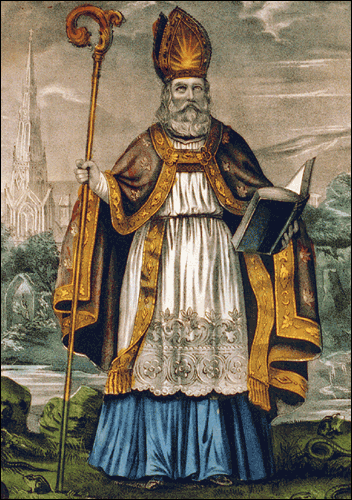
Because St. Patrick’s Day is so popular in Ireland, and all you really ever hear about on the date is Irish this Irish that, you probably just assume that St. Patrick is well…Irish. However, your assumption would be wrong. St. Patrick was actually Scottish and was said to be either born in Scotland or Wales. Even more shocking is that his name wasn’t even Patrick. His birth name is actually Maewyn Succat. However, at the age of 16, he was kidnapped and sold into Irish slavery. Later on in time he became a priest under bishop of Auxerre and took on the name Patricius, better known as Patrick. Here he felt that this was his calling to being Christianity and Ireland closer together. In any case, the Scottish should get some recognition on this day as well.

